Low Carb Diet And Sugar Free Gum

Low Carb Diet And Sugar Free Gum

Eat This, Not That! is reader-supported and every product we feature is independently vetted by our editors. When you buy through links on our site, we may earn a commission.

While nothing can truly replace pasta in taste and texture, there are lots of brands trying to enter the carb-conscious pasta market segment. From zero carb "wet" noodles that are nothing like standard pasta, to high-protein gluten-free dry pasta that is closer in texture to standard pasta, you've definitely got options.

Pasta made from raw vegetables and cut into noodles definitely has its benefits, too, but in this article we'll be focusing on shelf-stable versions only.

Let's also consider that no pasta, traditional or otherwise, is going to taste good if you're cooking it wrong. Make sure to read package directions so you don't overcook it.

When it comes to nutrition, sauces play a big role. You can pick the "healthiest" noodle or best low carb pasta, but if you're still slathering it in a heavy, fatty, salty sauce it won't have the best nutrition value. Get inspired with our list of 17 East Pasta Recipes That Are Surprisingly Healthy.

What makes pasta "unhealthy"?

Pasta doesn't automatically spell bad news. It's important to remember that carbs absolutely have their place in a healthy diet. They help provide fuel for essential functions, while whole grains contain important vitamins and minerals. The main problem is when these carbs are highly processed and your servings sizes are too large. If you prefer to keep your daily load of carbohydrates on the lower side, but you don't want to give up the idea of a nice plate of pasta, low carb pastas can definitely provide a solution. However, keep in mind that low carb pastas aren't necessarily synonymous with healthy eating, so looking at the ingredient list and the nutritional panel is of utmost importance.

What you put on your pasta matters, too. If your low-carb pasta lacks in protein and fiber, you can pair it with vegetables like broccoli, or beans like chickpeas, to round out the nutritional value of your meal.

Wondering about best products in other grocery categories? Sign up for our newsletter and stay informed about the latest food news.

How to buy low carb pasta

To make low carb noodles, brands often focus on creating flours from alternative sources like pulses, cauliflower, or other alternatives like shirataki for "wet" noodles. While everyone has their taste and texture preferences, there are a few things you can keep an eye on when shopping, to ensure you're getting the best noodle for you.

  • Look at the fiber content. If a pasta has a higher carbohydrate count than you're expecting, make sure there's a good amount of fiber in it. Just remember that any drastic changes in fiber intake can cause digestive side effects, so consider that when purchasing zero carb, zero fiber pastas.
  • When in doubt, opt for protein. Noodles made from kelp and konjac won't have any protein in them, while pastas made with pulse flours like garbanzo bean flour, will be protein-packed naturally. If you feel like you could go either way texture-wise, opt for a higher protein option.
  • Look for a short ingredient list. Short is great. When pasta is made from alternative ingredients, there's a chance that lots of fillers and extra ingredients were added to it to make it behave like standard pasta. Since many brands pull off between 1-3 ingredients, anything over 5 ingredients is worth questioning for more information.

The best low carb pastas you can buy

1. Banza Cavatappi Made From Chickpeas
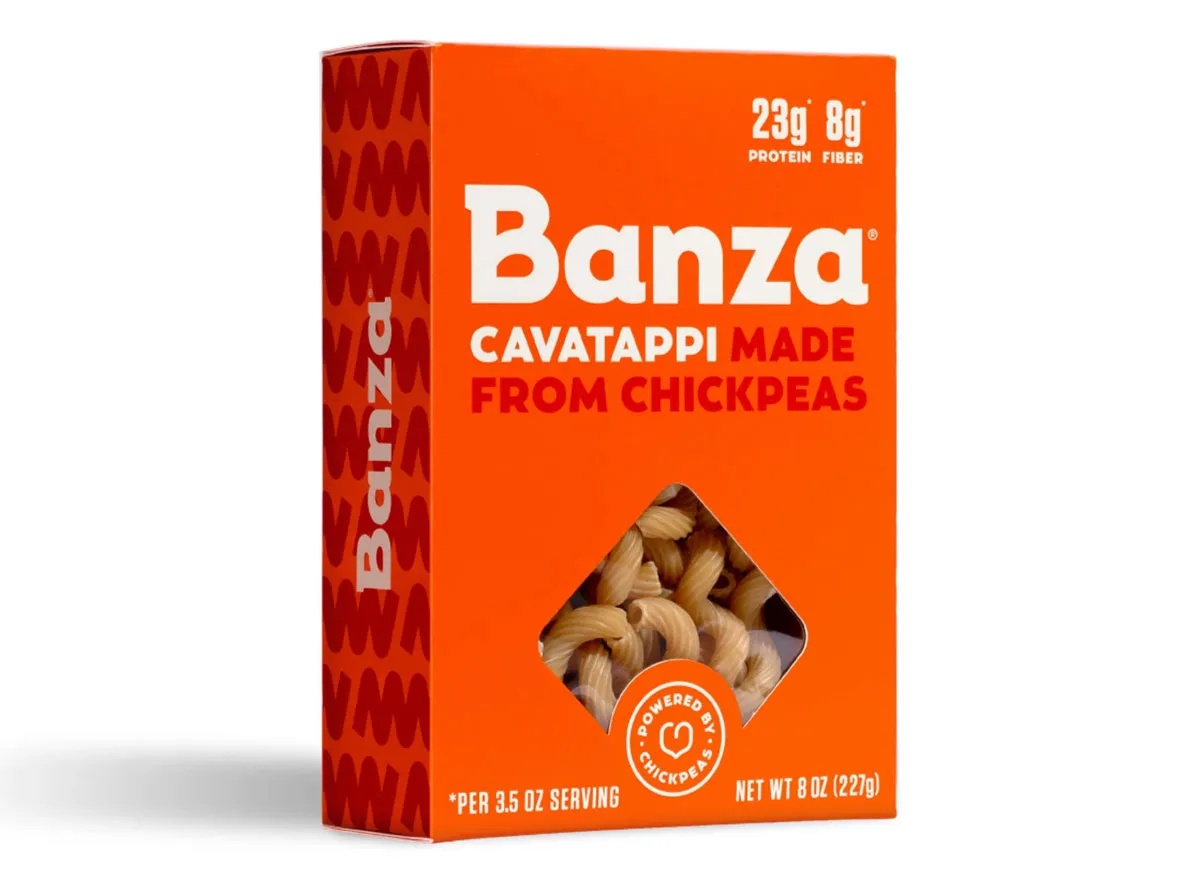
banza cavatappi

One serving: 2 oz, 190 calories, 3.5 g fat, 0 g saturated fat, 45 mg sodium, 32 g carbs, 5 g fiber, 2 g sugar, 13 g protein

Banza's chickpea pasta comes in lots of different shapes which means you can give many of your favorite recipes a healthy makeover. Boasting nearly two times the protein and three times the fiber of standard pasta, this plant-based protein pasta has great texture (speaking as a long-time consumer) and will become a pantry staple. Banza doesn't quite have the same amount of fiber and protein as some of the other pulse pasta brands, but the taste and texture alone is worth it.

2. Veggiecraft Farms Pasta Made With Cauliflower
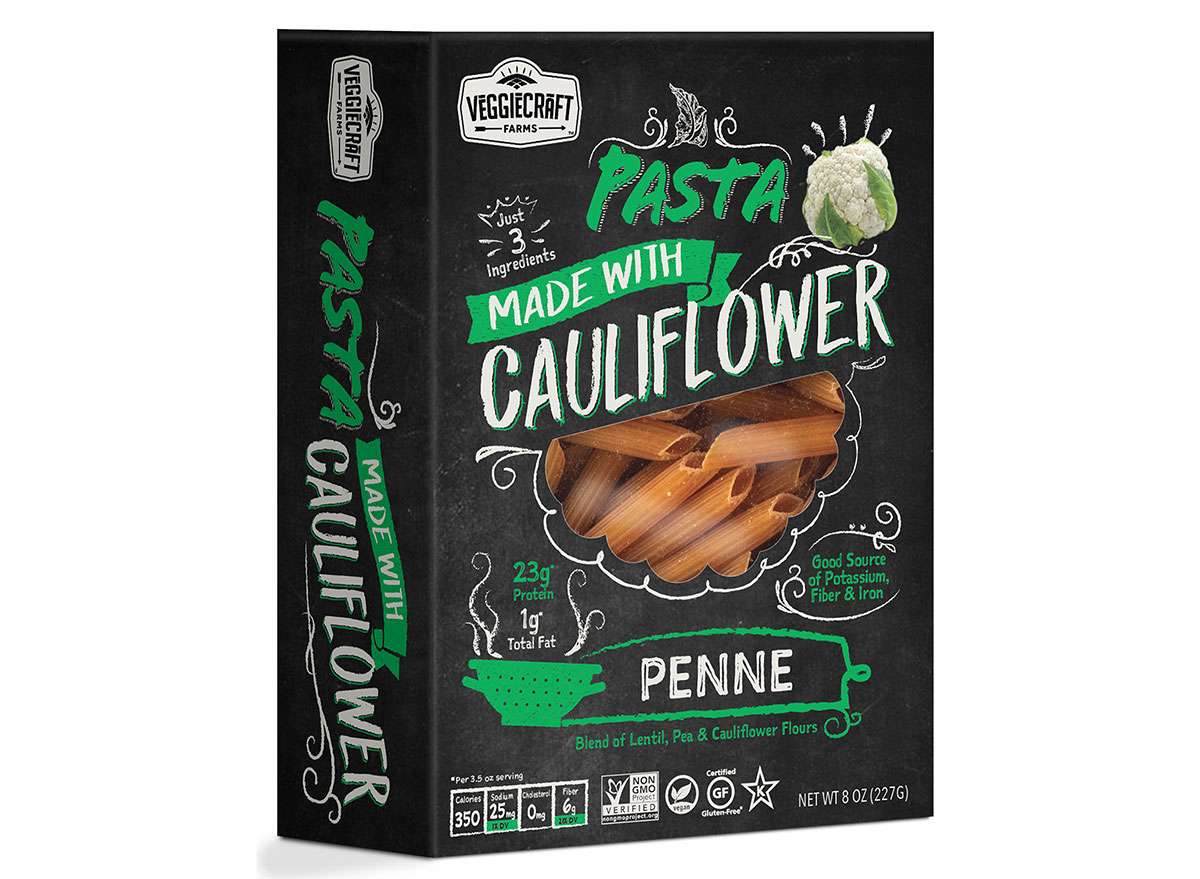
veggiecraft farms cauliflower pasta

One serving: 2 oz, 190 calories, 0 g fat, 15 mg sodium, 35 g carbs, 4 g fiber, 2 g sugar, 13 g protein

Veggiecraft pastas are made with three ingredients: lentil flour, pea flour, and cauliflower flour. This pick is high in fiber and protein (4 grams of fiber and 13 grams of protein per serving), and although the levels aren't the highest on this list, this option stands out because of the short, natural ingredient list.

3. Barilla Red Lentil Penne
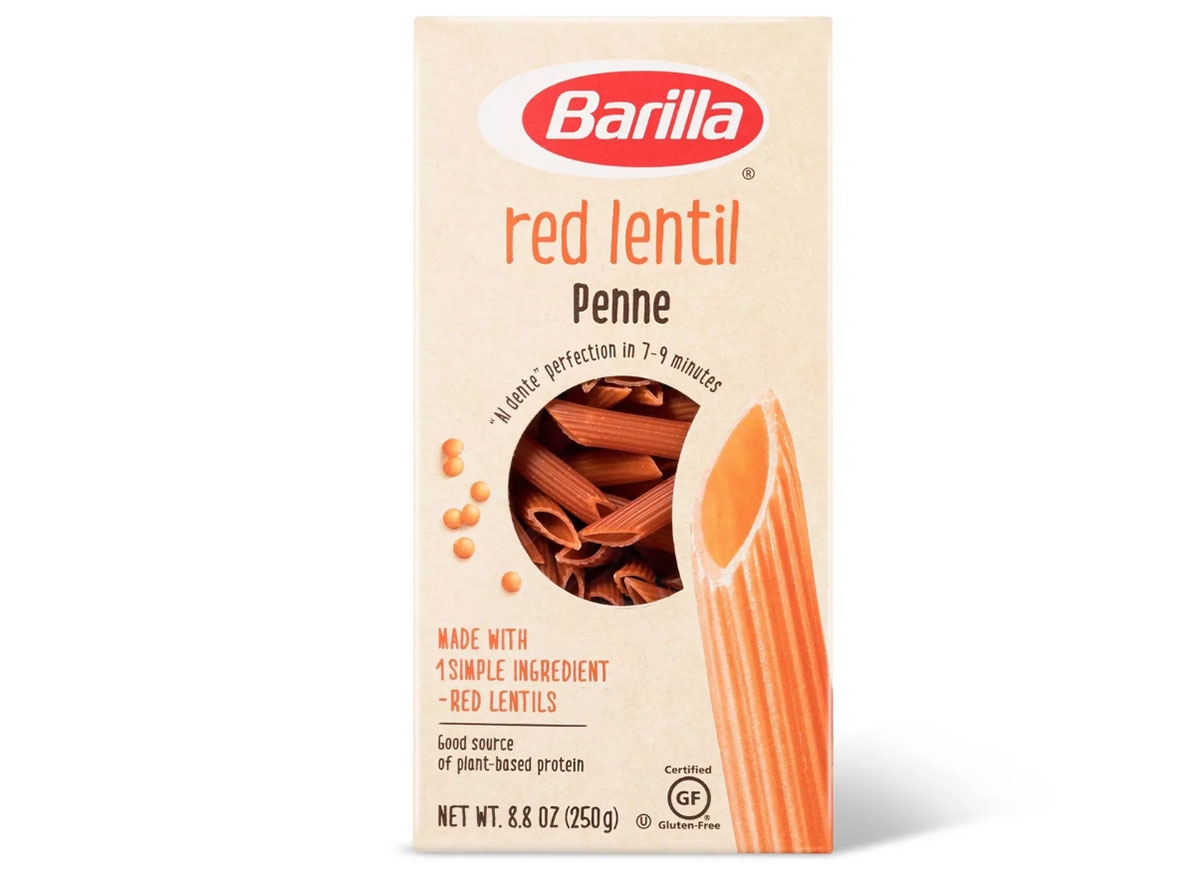
barilla red lentil pasta

One serving: 2 oz, 180 calories, 1.5 g fat, 0 g saturated fat, 0 mg sodium, 34 g carbs, 6 g fiber, 3 g sugar, 13 g protein

The classic pasta brand Barilla now makes a line of legume products. Their legume pastas are only made with one ingredient, in this case, red lentil flour. And that's a huge plus in our book. With 13 grams of protein per serving, this is a smart pick for those looking for high-protein options. However, just like some other picks on this list, the 34 grams of carbs with only 6 grams of fiber makes this a pretty carb-heavy option.

4. Trader Joe's Organic Black Bean Rotini
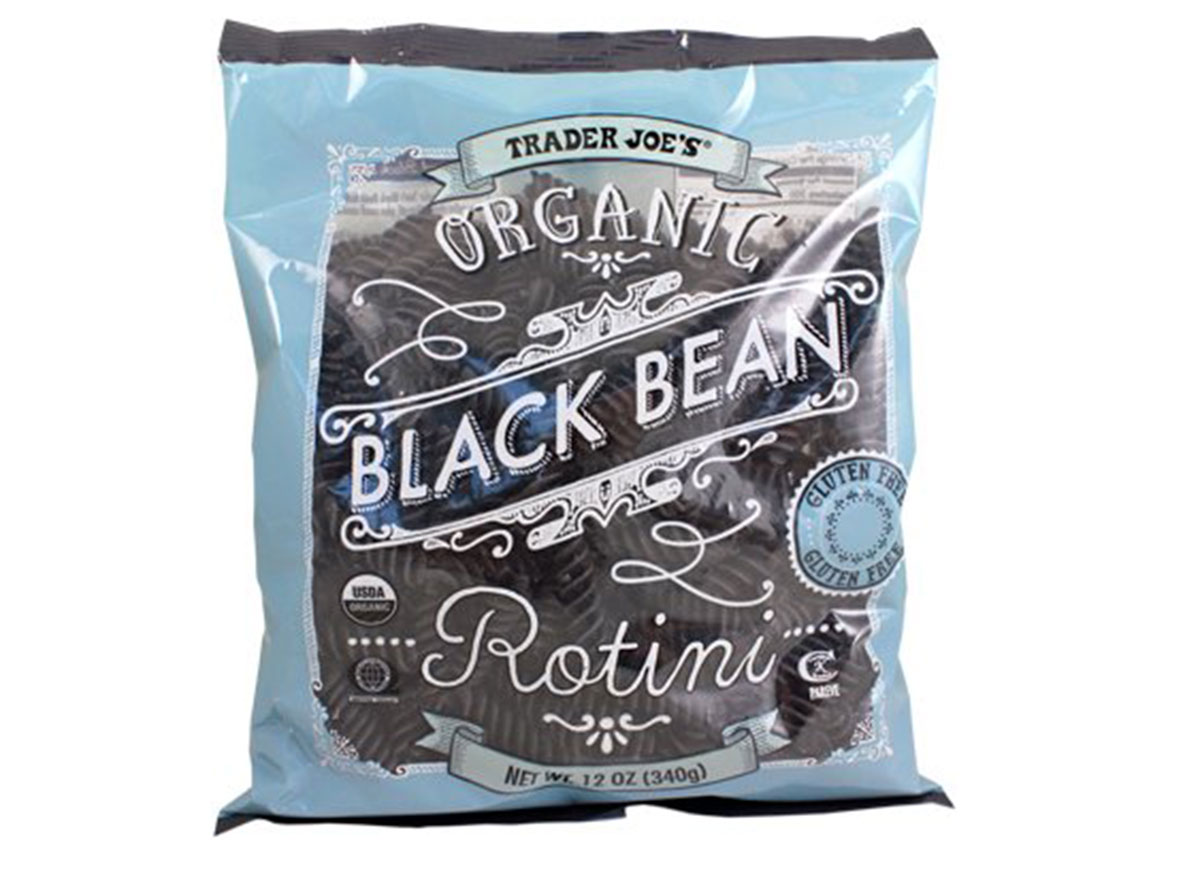
best low carb pastas trader joes black bean rotini

One serving: 2 oz, 200 calories, 1.5 g fat, 0 g saturated fat, 0 mg sodium, 35 g carbs, 15 g fiber, 2 g sugar, 14 g protein

Trader Joe's Black Bean Rotini is 100 percent what you see is what you get. Made with only one ingredient—organic black bean flour—these noodles have substantially more fiber and protein than comparable pastas (15 grams of fiber, 14 grams of protein). A really great pulse pasta pick!

5. Miracle Noodle Plant Based Noodles Fettuccine Style
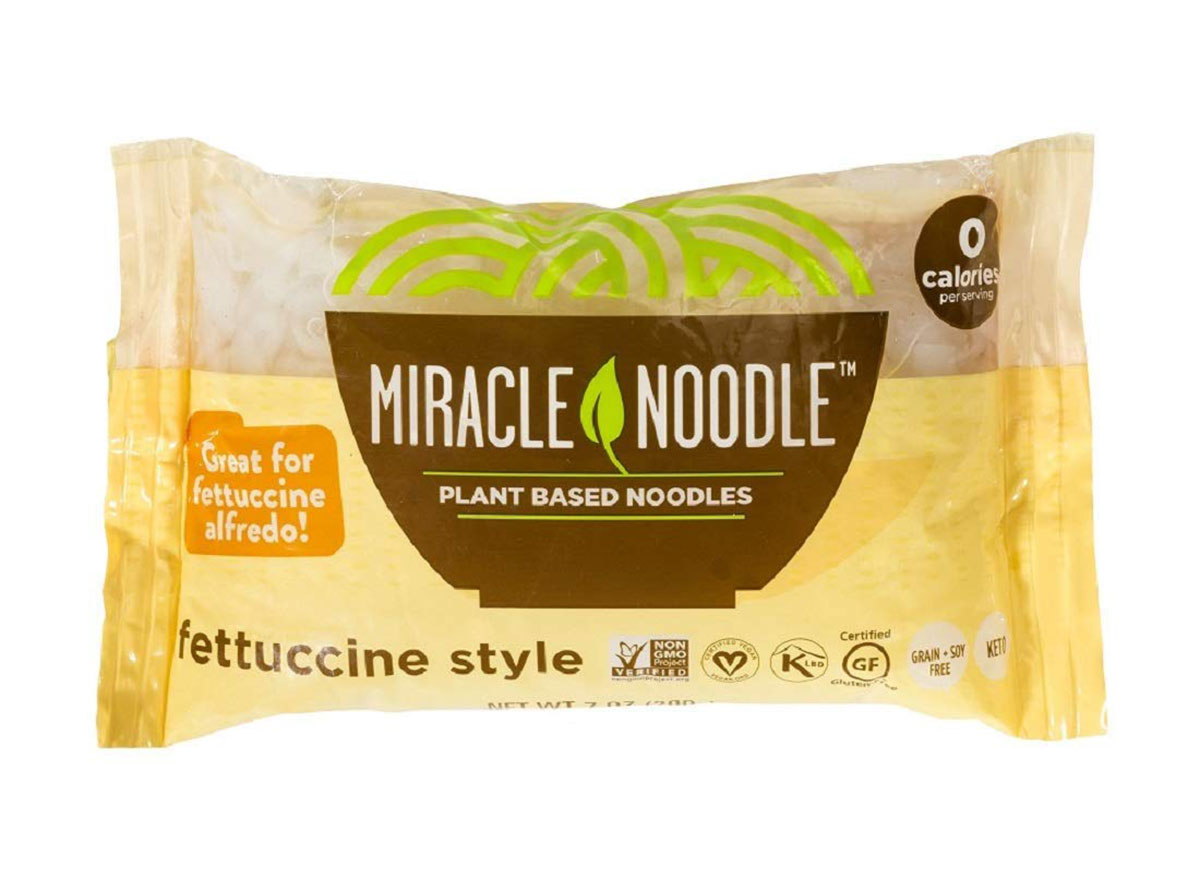
miracle noodle fettuccine

One serving: 3 oz, 0 calories, 0 g fat, 0 mg sodium, 1 g carbs, 2 g fiber, 0 g sugar, 0 g protein

Miracle Noodles is a brand of shirataki noodles: a white, jiggly Japanese noodle made from the root of the konjac plant. This pasta alternative is very low calorie, very low carb, with some fiber. The fiber is called glucomannan and is soluble. That means it turns into a gel-like substance once you eat it, leaving you feeling full for longer. This particular product is made from three ingredients: water, konjac flour, and citric acid. A 3-ounce serving has zero calories, 1 gram of carbs, and 2 grams of fiber. While you may get very excited about this nutrition panel (eating noodles for zero calories? yes please!), you'll need to decide whether or not you like the taste and texture. And keep in mind: if you're opting for something that has zero calories, protein, and fat, you'll need to make sure the rest of your meals are nutrient-dense.

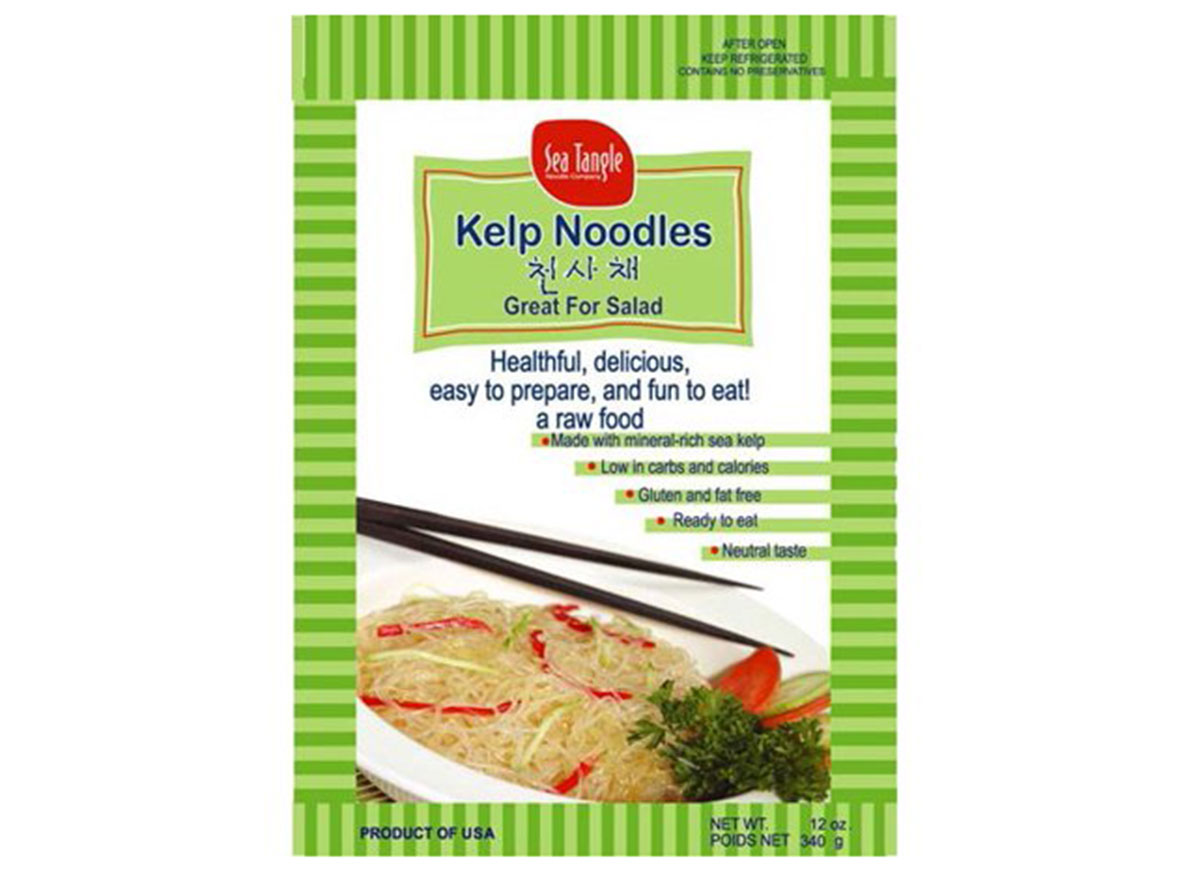
6. Sea Tangle Kelp Noodles
best low carb pastas sea tangle kelp noodles

One serving: 4 oz, 6 calories, 0 g fat, 65 mg sodium, 3 g carbs, 1 g fiber, 0 g protein

These noodles are basically seaweed that's been rinsed and dried. Packed with minerals like magnesium and calcium, this noodle alternative is low in calories and carbohydrates—you're only consuming 6 calories in a 4-ounce serving. The texture of these noodles is more similar to konjac noodles than a lentil or bean pasta. Again, because you're not getting a ton of nutrition from the noodles themselves, keep your other meals packed with protein and good fats.

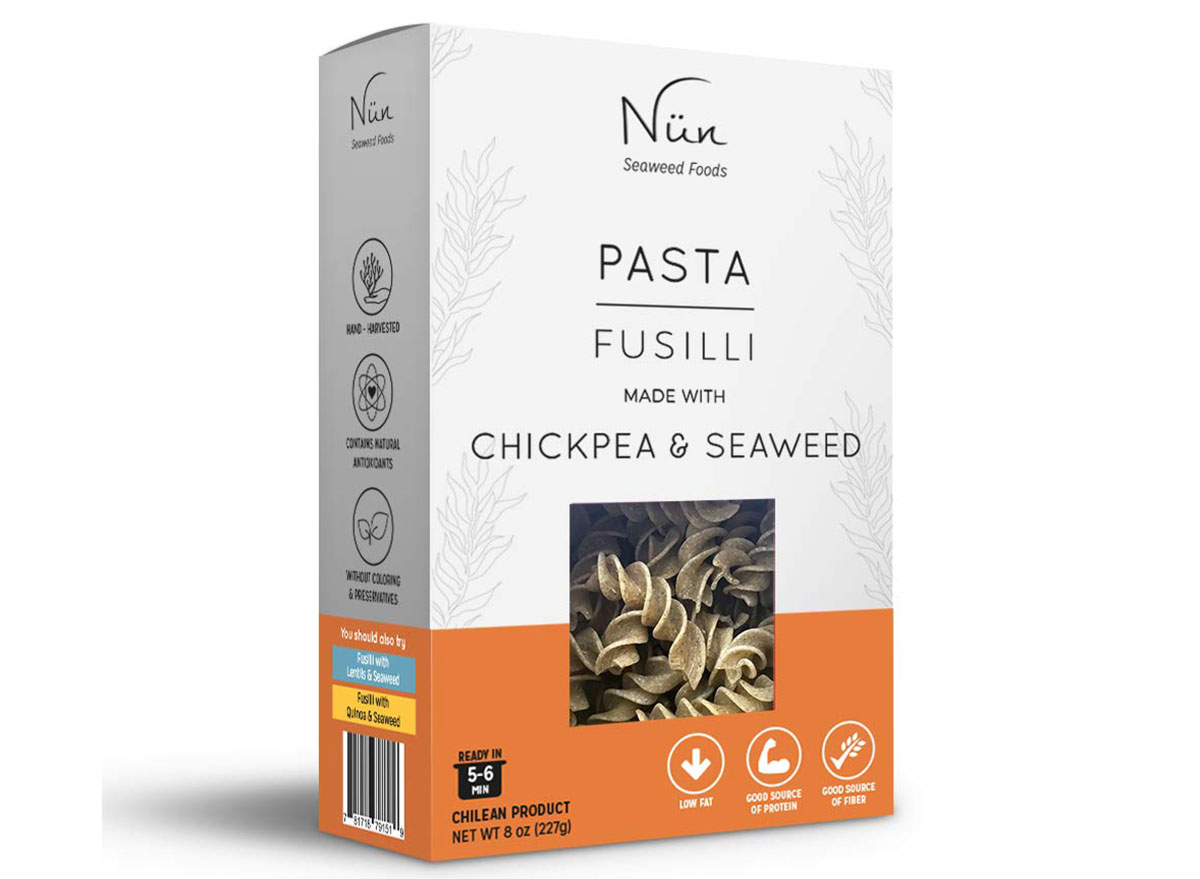
7. Nün Pasta Fusilli Made With Chickpea & Seaweed
best low carb pastas nun seaweed pasta

One serving: 2 oz, 182 calories, 1.2 g fat, 0 g saturated fat, 195 mg sodium, 35.2 g carbs, 4 g fiber, <1 g sugar, 7.6 g protein

Nün's pasta is the best middle ground between regular pasta and low carb pasta. It's made with a blend of durum wheat semolina, chickpea flour, and ground up Chilean seaweed. The company sustainably harvests their seaweed in Chilean costal communities, which checks the environmental and community-enrichment boxes. One serving has 195 milligrams of sodium, the second highest of any noodle on this list, but also contains a decent amount of protein (7.6 grams).

RELATED: Your ultimate restaurant and supermarket survival guide is here!

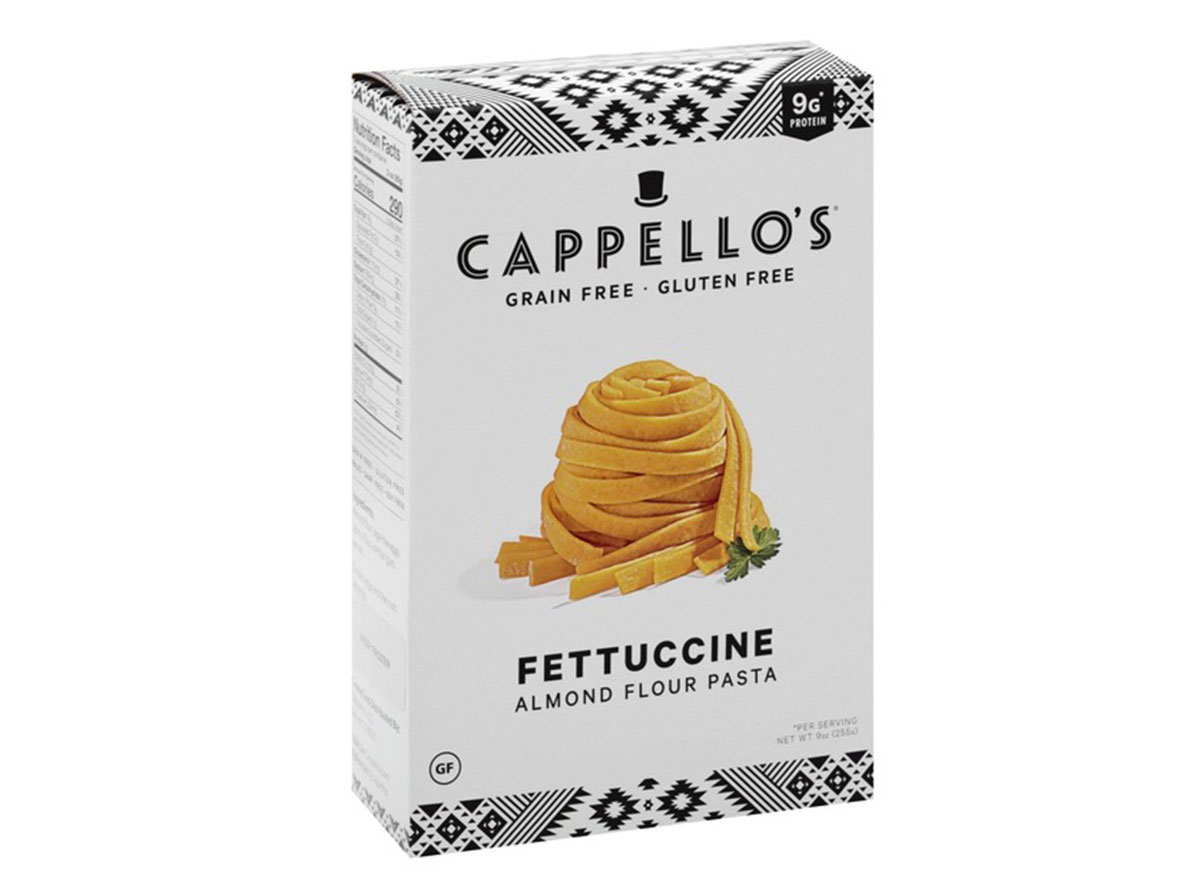
8. Cappello's Almond Flour Fettuccine
best low carb pastas capellos fettuccini

One serving: 3 oz, 290 calories, 16 g fat, 2 g saturated fat, 760 mg sodium, 31 g carbs, 3 g fiber, 1 g sugar, 9 g protein

Cappello's makes gluten-free products with almond flour. This fettuccini is said to be silkier and more "buttery" than traditional pasta. Made without gluten, grain, soy, and dairy, and the only noodle of the group that uses eggs. The ingredient list only contains almond flour, tapioca flour, xanthan gum, and salt. But be aware of the sodium levels with this pick. One serving contains 760 milligrams, the highest of any noodle on this list, and that's without the sauce. So plan the rest of your day consciously if you need to watch your sodium intake.

Low Carb Diet And Sugar Free Gum

Source: https://www.eatthis.com/best-low-carb-pastas/

Share:

Vegan Diet Vs Low Carb

Vegan Diet Vs Low Carb

News Release

Thursday, January 21, 2021

NIH study compares low-fat, plant-based diet to low-carb, animal-based diet

Image of dinners from each diet

Examples of dinners given to study participants: low-carb, animal-based diet (left) and low-fat, plant-based diet (right). Amber Courville and Paule Joseph, NIH

People on a low-fat, plant-based diet ate fewer daily calories but had higher insulin and blood glucose levels, compared to when they ate a low-carbohydrate, animal-based diet, according to a small but highly controlled study at the National Institutes of Health. Led by researchers at the National Institute of Diabetes and Digestive and Kidney Diseases (NIDDK), the study compared the effects of the two diets on calorie intake, hormone levels, body weight, and more. The findings, published in Nature Medicine, broaden understanding of how restricting dietary carbohydrates or fats may impact health.

"High-fat foods have been thought to result in excess calorie intake because they have many calories per bite. Alternatively, high-carb foods can cause large swings in blood glucose and insulin that may increase hunger and lead to overeating," said NIDDK Senior Investigator Kevin Hall, Ph.D., the study's lead author. "Our study was designed to determine whether high-carb or high-fat diets result in greater calorie intake."

The researchers housed 20 adults without diabetes for four continuous weeks in the NIH Clinical Center's Metabolic Clinical Research Unit. The participants, 11 men and nine women, received either a plant-based, low-fat diet or an animal-based, low-carbohydrate diet for two weeks, immediately followed by two weeks on the alternate diet. The low-fat diet was high in carbohydrates. The low-carbohydrate diet was high in fats. Both diets were minimally processed and had equivalent amounts of non-starchy vegetables. The participants were given three meals a day, plus snacks, and could eat as much as desired.

The main results showed that people on the low-fat diet ate 550 to 700 fewer calories per day than when they ate the low-carb diet. Despite the large differences in calorie intake, participants reported no differences in hunger, enjoyment of meals, or fullness between the two diets. Participants lost weight on both diets, but only the low-fat diet led to a significant loss of body fat.

"Despite eating food with an abundance of high glycemic carbohydrates that resulted in pronounced swings in blood glucose and insulin, people eating the plant-based, low-fat diet showed a significant reduction in calorie intake and loss of body fat, which challenges the idea that high-carb diets per se lead people to overeat. On the other hand, the animal-based, low-carb diet did not result in weight gain despite being high in fat," said Hall.

These findings suggest that the factors that result in overeating and weight gain are more complex than the amount of carbs or fat in one's diet. For example, Hall's laboratory showed in 2019 that a diet high in ultra-processed food led to overeating and weight gain in comparison to a minimally processed diet matched for carbs and fat.

The plant-based, low-fat diet contained 10.3% fat and 75.2% carbohydrate, while the animal-based, low-carb diet was 10% carbohydrate and 75.8% fat. Both diets contained about 14% protein and were matched for total calories presented to the subjects, although the low-carb diet had twice as many calories per gram of food than the low-fat diet. On the low-fat menu, dinner might consist of a baked sweet potato, chickpeas, broccoli and oranges, while a low-carb dinner might be beef stir fry with cauliflower rice. Subjects could eat what and however much they chose of the meals they were given.

"Interestingly, our findings suggest benefits to both diets, at least in the short-term. While the low-fat, plant-based diet helps curb appetite, the animal-based, low-carb diet resulted in lower and more steady insulin and glucose levels," Hall said. "We don't yet know if these differences would be sustained over the long term."

The researchers note that the study was not designed to make diet recommendations for weight loss, and results may have been different if participants were actively trying to lose weight. Further, all meals were prepared and provided for participants in an inpatient setting, which may make results difficult to repeat outside the lab, where factors such as food costs, food availability, and meal preparation constraints can make adherence to diets challenging. The tightly controlled clinical environment, however, ensured objective measurement of food intake and accuracy of data.

"To help us achieve good nutrition, rigorous science is critical − and of particular importance now, in light of the COVID-19 pandemic, as we aim to identify strategies to help us stay healthy," said NIDDK Director Griffin P. Rodgers, M.D. "This study brings us closer to answering long-sought questions about how what we eat affects our health."

The research was supported by the NIDDK Intramural Research Program. Additional NIH support came from the National Institute of Nursing Research under grant 1Z1ANR000035-01.

About the National Institute of Diabetes and Digestive and Kidney Diseases (NIDDK): The NIDDK, a component of the National Institutes of Health (NIH), conducts and supports research on diabetes and other endocrine and metabolic diseases; digestive diseases, nutrition and obesity; and kidney, urologic and hematologic diseases. Spanning the full spectrum of medicine and afflicting people of all ages and ethnic groups, these diseases encompass some of the most common, severe, and disabling conditions affecting Americans. For more information about the NIDDK and its programs, see http://www.niddk.nih.gov.

About the National Institutes of Health (NIH): NIH, the nation's medical research agency, includes 27 Institutes and Centers and is a component of the U.S. Department of Health and Human Services. NIH is the primary federal agency conducting and supporting basic, clinical, and translational medical research, and is investigating the causes, treatments, and cures for both common and rare diseases. For more information about NIH and its programs, visit www.nih.gov.

NIH…Turning Discovery Into Health®

References

Hall KD, et al. Effect of a plant-based, low-fat diet versus an animal-based, ketogenic diet on ad libitum energy intake. Nature Medicine. January 21, 2021.

###

Vegan Diet Vs Low Carb

Source: https://www.nih.gov/news-events/news-releases/nih-study-compares-low-fat-plant-based-diet-low-carb-animal-based-diet#:~:text=%E2%80%9CInterestingly%2C%20our%20findings%20suggest%20benefits,glucose%20levels%2C%E2%80%9D%20Hall%20said.

Share:

Does A Low Carb Diet Burn Fat

Does A Low Carb Diet Burn Fat

Low-carb diets are very effective for people who want to lose weight.

As well as being satisfying and healthy, a strict low-carb diet is able to switch your body into fat burning mode.

To achieve effective weight loss on a low-carb diet, you'll need to:

  • Keep carbohydrate intake low
  • Protein intake moderate
  • Fat intake high
  • Avoid snacking
  • Exercise regularly

The information on this page guides you towards what you need to do to lose weight on a low-carb diet.

Other guides that you will find useful, include:

  • How low carb diets work – for the theory on how the diet helps to reduce weight and blood sugar
  • How to follow a healthy low-carb diet – this will tell you which type of foods to include in your diet
  • Common mistakes on a low-carb diet – see if you're making any of these mistakes which could be holding back your success
  • Why is low-carb not working? – see if there are any others factors that may be making weight loss harder for you than it is for others

Low carb, moderate protein, high fat

Getting the right balance of carbohydrate, protein and fat should help you lose weight.

Most people can have success on a low carb diet without having to measure how much carbs, protein or fat they're having.

Avoiding starchy foods like bread, rice, pasta, potatoes and pastry and not having too much protein-based foods including meat, cheese and nuts, is a good basis for most people to lose weight.

However, some of you may want to monitor your energy intake to make sure you're keeping on the right lines. There are a number of apps that can help with this.

Keep carbohydrate low

It's up to you how low-carb you want your diet to be but strict ketogenic low-carb diets are particularly good for achieving weight loss.

Carbohydrate intake usually needs to be below 50g per day to be ketogenic. Some people may find they need to restrict their carb intake further, say to under 30g, to achieve a ketogenic diet.

Ketogenic diets are when the body is being fuelled primarily by ketones rather than by glucose. Ketones are a form of energy produced by the breaking down of body fat.

To achieve a ketogenic diet , you will need to eliminate grains, starchy foods and most fruit from your diet.

When keeping to a strict low-carb diet, it's important to be aware how much carbohydrate is in different foods. To help out, see our guide on which foods have more carbs than you might expect

Protein should be moderate

Protein should be moderate for weight loss to occur. Too much protein can cause the liver to produce too much glucose (a process called gluconeogenesis) which leads to higher blood sugar levels and can hamper weight loss.

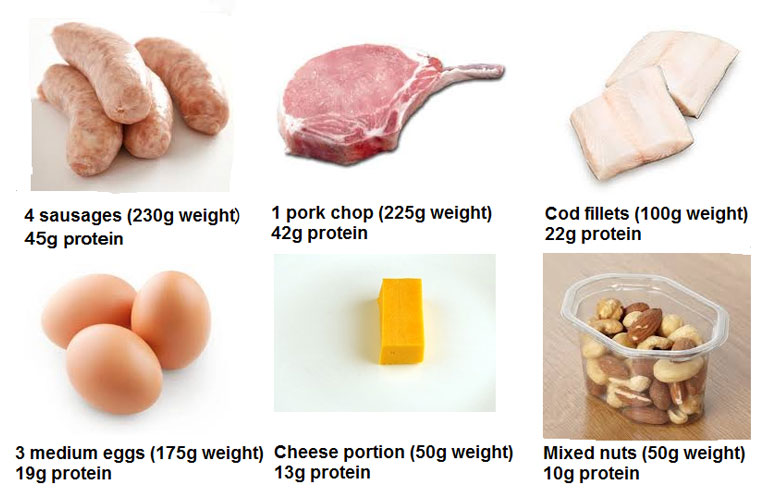
There is no fixed figure for how much 'moderate' should be but low-carb diet researchers and doctors recommend upper limits of anywhere between 30g and 120g of protein.

As this is quite a wide spread, it may be best to aim for a more conservative window of around 50g to 60g of protein a day and work from there. [196] [197]

The following image gives a visual guide to how much protein can be found in typical foods.

Protein in meat

High in natural fats

A low-carb ketogenic diet for weight loss has a high fat content with fats coming from natural sources such as meat, oily fish, nuts, avocado, olive oil and dairy.

Fat is the energy providing nutrient (macronutrient) that results in the least impact on blood glucose, insulin levels and weight gain.

Put another way, a high fat diet is more likely to assist weight loss than diets that are high in carbohydrate or protein.

Most people find that if they keep carbohydrate intake low and protein intake sensible, they do not need to monitor how much fat they're having.

One point to bear in mind is that a number of fatty foods, such as meat, fish, nuts and cheese are sources of protein and yoghurt and nuts are a source of carbohydrate so be wary of having excessive amounts of these foods.

Avoid snacking

A low-carb ketogenic diet is generally fairly self-regulating. Many people will find that it's actually quite hard to overeat when sticking to a low-carb, moderate-protein, high-fat diet.

However, no diet is totally fool proof and weight loss will be best achieved if you can avoid snacking between meals.

This will help to keep the level of insulin in your body low and therefore help your body to burn fat.

Exercise regularly

Exercise works the muscles and helps them to take in excess glucose and energy from the blood, which helps lower insulin levels, promote ketosis and therefore stimulate weight loss.

Adding regular exercise to a low-carb diet therefore gives a belt and braces approach to reducing your waistline.

Monitoring fat burning (ketosis)

Measuring your weight is the most obvious way to measure weight loss but some people may wish to also measure their ketone levels.

Ketones are produced in direct response to the burning of fat and so this is a good way measuring to check if your body is burning fat.

Note that sometimes weight loss can occur as a result of fluid loss and weight can be put on in terms of muscle if you have been exercising, so measuring ketones helps avoid these uncertainties.

Measuring ketones can be useful if your weight loss stalls or if you make a change to your diet and want to review whether fat burning is indeed occurring.

Does A Low Carb Diet Burn Fat

Source: https://www.diabetes.co.uk/diet/low-carb-and-weight-loss.html

Share:

Best Low Fat Low Carb Diet Plan

Best Low Fat Low Carb Diet Plan

A low-carb diet is a diet that restricts carbohydrates, such as those found in sugary foods, pasta and bread. It is high in protein, fat and healthy vegetables.

There are many different types of low-carb diets, and studies show that they can cause weight loss and improve health.

This is a detailed meal plan for a low-carb diet. It explains what to eat, what to avoid and includes a sample low-carb menu for one week.

Your food choices depend on a few things, including how healthy you are, how much you exercise and how much weight you have to lose.

Consider this meal plan as a general guideline, not something written in stone.

Eat: Meat, fish, eggs, vegetables, fruit, nuts, seeds, high-fat dairy, fats, healthy oils and maybe even some tubers and non-gluten grains.

Don't eat: Sugar, HFCS, wheat, seed oils, trans fats, "diet" and low-fat products and highly processed foods.

You should avoid these six food groups and nutrients, in order of importance:

  • Sugar: Soft drinks, fruit juices, agave, candy, ice cream and many other products that contain added sugar.
  • Refined grains: Wheat, rice, barley and rye, as well as bread, cereal and pasta.
  • Trans fats: Hydrogenated or partially hydrogenated oils.
  • Diet and low-fat products: Many dairy products, cereals or crackers are fat-reduced, but contain added sugar.
  • Highly processed foods: If it looks like it was made in a factory, don't eat it.
  • Starchy vegetables: It's best to limit starchy vegetables in your diet if you're following a very low-carb diet.

You must read ingredient lists even on foods labelled as health foods.

For more details, check out this article on 14 foods to avoid on a low-carb diet.

You should base your diet on these real, unprocessed, low-carb foods.

  • Meat: Beef, lamb, pork, chicken and others; grass-fed is best.
  • Fish: Salmon, trout, haddock and many others; wild-caught fish is best.
  • Eggs: Omega-3-enriched or pastured eggs are best.
  • Vegetables: Spinach, broccoli, cauliflower, carrots and many others.
  • Fruits: Apples, oranges, pears, blueberries, strawberries.
  • Nuts and seeds: Almonds, walnuts, sunflower seeds, etc.
  • High-fat dairy: Cheese, butter, heavy cream, yogurt.
  • Fats and oils: Coconut oil, butter, lard, olive oil and fish oil.

If you need to lose weight, be careful with cheese and nuts, as it's easy to overeat on them. Don't eat more than one piece of fruit per day.

Foods to Maybe Include

If you're healthy, active and don't need to lose weight, you can afford to eat a few more carbs.

  • Tubers: Potatoes, sweet potatoes and some others.
  • Unrefined grains: Brown rice, oats, quinoa and many others.
  • Legumes: Lentils, black beans, pinto beans, etc. (if you can tolerate them).

What's more, you can have the following in moderation, if you want:

  • Dark chocolate: Choose organic brands with at least 70% of cocoa.
  • Wine: Choose dry wines with no added sugar or carbs.

Dark chocolate is high in antioxidants and may provide health benefits if you eat it in moderation. However, be aware that both dark chocolate and alcohol will hinder your progress if you eat/drink too much.

Beverages

  • Coffee
  • Tea
  • Water
  • Sugar-free carbonated beverages, like sparkling water.

This is a sample menu for one week on a low-carb diet plan.

It provides less than 50 grams of total carbs per day. However, if you're healthy and active you can eat slightly more carbs.

Monday

  • Breakfast: Omelet with various vegetables, fried in butter or coconut oil.
  • Lunch: Grass-fed yogurt with blueberries and a handful of almonds.
  • Dinner: Bunless cheeseburger, served with vegetables and salsa sauce.

Tuesday

  • Breakfast: Bacon and eggs.
  • Lunch: Leftover burgers and veggies from the previous night.
  • Dinner: Salmon with butter and vegetables.

Wednesday

  • Breakfast: Eggs and vegetables, fried in butter or coconut oil.
  • Lunch: Shrimp salad with some olive oil.
  • Dinner: Grilled chicken with vegetables.

Thursday

  • Breakfast: Omelet with various vegetables, fried in butter or coconut oil.
  • Lunch: Smoothie with coconut milk, berries, almonds and protein powder.
  • Dinner: Steak and veggies.

Friday

  • Breakfast: Bacon and eggs.
  • Lunch: Chicken salad with some olive oil.
  • Dinner: Pork chops with vegetables.

Saturday

  • Breakfast: Omelet with various veggies.
  • Lunch: Grass-fed yogurt with berries, coconut flakes and a handful of walnuts.
  • Dinner: Meatballs with vegetables.

Sunday

  • Breakfast: Bacon and eggs.
  • Lunch: Smoothie with coconut milk, a dash of heavy cream, chocolate-flavored protein powder and berries.
  • Dinner: Grilled chicken wings with some raw spinach on the side.

Include plenty of low-carb vegetables in your diet. If your goal is to remain under 50 grams of carbs per day, there is room for plenty of veggies and one fruit per day.

If you want to see more examples of go-to meals, check out this article on 7 healthy low-carb meals in under 10 minutes.

Again, if you're healthy, lean and active, you can add some tubers like potatoes and sweet potatoes, as well as some healthy grains like oats.

Healthy, Low-Carb Snacks

There is no health reason to eat more than three meals per day, but if you get hungry between meals, here are some healthy, easy-to-prepare, low-carb snacks that can fill you up:

  • A piece of fruit
  • Full-fat yogurt
  • One or two hard-boiled eggs
  • Baby carrots
  • Leftovers from the previous night
  • A handful of nuts
  • Some cheese and meat

At most restaurants, it's fairly easy to make your meals low-carb friendly.

  1. Order a meat- or fish-based main dish.
  2. Drink plain water instead of sugary soda or fruit juice.
  3. Get extra vegetables instead of bread, potatoes or rice.

A good rule is to shop at the perimeter of the store, where the whole foods are more likely to be found.

Focusing on whole foods will make your diet a thousand times better than the standard Western diet.

Organic and grass-fed foods are also popular choices and often considered healthier, but they're typically more expensive.

Try to choose the least processed option that still fits into your price range.

  • Meat (beef, lamb, pork, chicken, bacon)
  • Fish (fatty fish like salmon is best)
  • Eggs (choose omega-3 enriched or pastured eggs if you can)
  • Butter
  • Coconut oil
  • Lard
  • Olive oil
  • Cheese
  • Heavy cream
  • Sour cream
  • Yogurt (full-fat, unsweetened)
  • Blueberries (fresh or frozen)
  • Nuts
  • Olives
  • Fresh vegetables (greens, peppers, onions, etc.)
  • Frozen vegetables (broccoli, carrots, various mixes)
  • Condiments (sea salt, pepper, garlic, mustard, etc.)

Clear your pantry of all unhealthy temptations if you can, such as chips, candy, ice cream, sodas, juices, breads, cereals and baking ingredients like refined flour and sugar.

Low-carb diets restrict carbs, such as those found in sugary and processed foods, pasta and bread. They're high in protein, fat and healthy vegetables.

Studies show that they can cause weight loss and improve health.

The above meal plan gives you the basics of healthy, low-carb eating.

If you need a comprehensive list of low-carb recipes that are both simple and delicious, check out this article on 101 healthy low-carb recipes that taste incredible.

Of course, you can also browse the Internet for even more low carb or paleo recipes.

Best Low Fat Low Carb Diet Plan

Source: https://www.healthline.com/nutrition/low-carb-diet-meal-plan-and-menu

Share:

Low Carb Diet For Breastfeeding

Low Carb Diet For Breastfeeding

These 10 Foods Are Low in Potassium

CC BY 2.0/Farzana Ahmad/Flickr

If you're on a potassium-restricted diet, it's important to stick with foods that are going to help you stay on track and feel your best. Learn more about some common foods that are low in potassium and will be a welcome part of your new diet.

Eggs

Eggs are a staple of the low-potassium diet since they're high in protein and essential nutrients. Try them scrambled or in an omelet with low-potassium veggies.

CC BY-SA 2.0/Ultra-Lab/Flickr

Kale

Kale is a popular veggie that's also a superfood. It also happens to be low in potassium, so don't hesitate to load up your plate with kale for a salad or stir-fry.

CC BY 2.0/jules/Flickr

Whole Wheat Pasta

Cutting down on potassium doesn't mean sacrificing some of your favorite dishes. Whole wheat pasta is a solid low-sodium meal choice that provides plenty of nutrients and a serving of whole grains so you stay satisfied.

CC BY 2.0/Marco Verch/Flickr

Goat Cheese

While dairy tends to be a high-potassium food, there are some cultured dairy products that are safe for a low-potassium diet. Goat cheese is an example of one such dairy product and sub for cream cheese in recipes or on salads and sandwiches.

CC0/Devanath/Pixabay

Apples

Apples are high-fiber fruits that are packed with nutrients and also low in potassium. Keep apples on hand for quick grab-and-go snacks or even to enjoy sliced as cracker substitutes.

CC BY-SA 2.0/esc861/Flickr

Chia Seeds

Chia seeds are high in protein and fiber and are an ideal low-potassium choice for breakfasts and snacks. Make them into a pudding or sprinkle them onto soups and cereals.

CC BY 2.0/Philipp Alexander/Flickr

Peppers

The pepper is a tasty low-potassium veggie that's packed with vitamins and flavor. Use these diced in salads and eggs or stuff them with your favorite low-potassium filling for a tasty dinner.

CC BY 2.0/Marco Verch/Flickr

White Rice

White rice is a staple food across many cultures, and it also happens to have a low potassium content. Enjoy white rice as a base for stir fries and stews or as a side for other favorite entrees.

CC BY 2.0/Marco Verch/Flickr

Grapefruit

Grapefruit is a tangy citrus fruit that's a tasty choice for breakfast or a snack. Pair it with some chia seeds for an extra boost of low-potassium nutrition.

CC BY 2.0/Duncan Hull/Flickr

Nuts

Most nuts, including almonds, cashews, walnuts and macadamia nuts, are low in potassium. This makes them solid choices for snacking or adding to salads and soups for a protein boost.

CC0/stevepb/Pixabay

More From QuestionsAnswered.net

Low Carb Diet For Breastfeeding

Source: https://www.questionsanswered.net/article/these-10-foods-are-low-potassium?utm_content=params%3Ao%3D740012%26ad%3DdirN%26qo%3DserpIndex

Share:

Low Carb Diet Foods For Weight Loss

Low Carb Diet Foods For Weight Loss

Photo Courtesy: uvahealth/YouTube

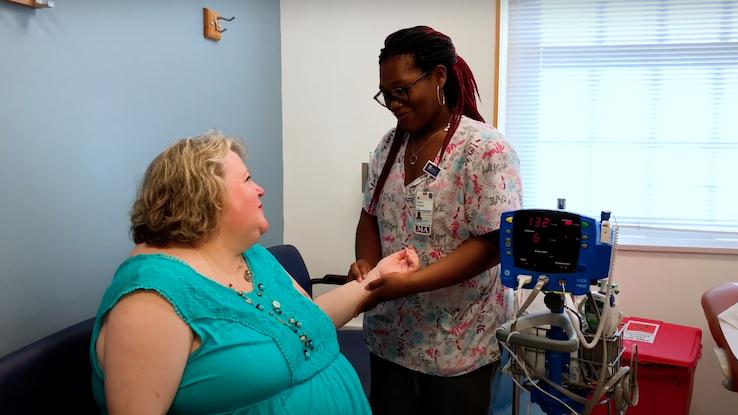
Losing weight can improve your health in numerous ways, but sometimes, even your best diet and exercise efforts may not be enough to reach the results you're looking for. If that's the case, you might consider exploring weight-loss surgery — also called bariatric surgery — as a treatment option to help you shed pounds and potentially improve other health conditions you're experiencing as a result of obesity. Bariatric surgery is an involved treatment that'll require you to make some lifelong changes, however, so it's important to learn more about what to expect before you pursue this procedure.

Although there are different types of weight-loss surgeries, they all make surgical changes to your stomach and to other parts of your digestive system. The main reason for doing this is to make your stomach smaller, which restricts the amount of food you can eat. When you eat less food, you consume fewer calories, and this leads to weight loss over time. Bariatric surgery can cause your digestive system to absorb fewer nutrients, which also helps you lose weight. Eventually, your gut hormones, which are responsible for making you feel hungry or full, begin to shift, helping your body adapt to functioning at your new, lower weight.

Weight-loss surgery isn't an option for people who only have a few pounds to lose. It's intended for people who are obese, which means they weigh more than what the medical community considers healthy for their heights. Doctors sometimes assess obesity using a screening tool called body mass index, or BMI. Your physician can calculate your BMI to determine whether you're obese; according to the CDC, having a BMI of 30 or higher classifies you as obese. Weight-loss surgery is intended for people with BMIs of 40 or higher.

According to the Mayo Clinic, weight-loss surgeries can help improve your quality of life by reducing your risk of developing weight-related health conditions such as heart disease and sleep apnea, but these surgeries also have some risks and potential complications of their own. It's important to remember that you'll have a road to recovery following surgery — it isn't an instant cure — and you'll need to create some new nutrition and other lifestyle habits to apply for the rest of your life.

Types of Weight-loss Surgery

You may have heard about gastric bypass surgery before, but this is only one type of weight-loss procedure. There are several others to consider for this treatment.

The Roux-en-Y gastric bypass surgery is perhaps the most well-known weight-loss surgery. During this procedure, the surgeon separates the top section of your stomach from the bottom, creating a 1-ounce-sized pouch with the top. The surgeon then disconnects your small intestine from your stomach, bringing the intestine up to connect to the new pouch. The remaining large section of your stomach is reconnected to your intestine at a lower point. The small pouch restricts the amount of food this new stomach can hold.

Sleeve gastrectomy — instead of leaving a large, unused section of your stomach in your abdomen — removes about 80% of the organ. This leaves behind a tube-shaped section of stomach that's about the size of a banana, according to the American Society for Metabolic and Bariatric Surgery. Again, this limits the amount of food you can eat.

Gastric band surgery is a little different from the options above. This procedure places an inflatable band device around a small upper portion of your stomach, leaving a small hole for food to move into and get processed by the larger, lower stomach section. The small pouch above the band functions as your new stomach and helps you feel fuller faster.

Are You a Candidate for Weight-loss Surgery?

Ultimately, your doctor will work with you to determine whether bariatric surgery is a suitable option for you. However, there are some general criteria and medical guidelines that people typically need to meet before they're able to pursue weight-loss surgery. It's important to remember that these surgeries aren't without their own risks even though they can improve your health in the long run when they're successful. This is why you'll undergo a screening process before your doctor determines it's safe to move forward with one of the options.

Being obese with a BMI over 30 doesn't necessarily qualify you for weight-loss surgery. You'll likely need to have a BMI of 40 or higher, and you'll have to have had difficulty losing weight through changing your diet, exercising and making other efforts to lower your BMI. You may need to demonstrate these efforts to your doctor, and they may want to work with you to create new diet and exercise habits before considering bariatric surgery.

In some cases, people with BMIs under 40 are candidates for weight-loss surgery. People who have serious health complications related to their weight, such as high blood pressure, type 2 diabetes or sleep apnea — but who have BMIs of 39–39 — may be approved for these procedures. Most patients who are good candidates for weight-loss surgery are adults, but if you're a teenager who's gone through puberty, have a BMI over 35 and have health complications related to obesity, you may also be a candidate.

Preparing for Weight-loss Surgery

Once your physician has determined you're a good candidate for weight-loss surgery, you'll begin a new health journey before you even have the procedure. There's a lot that goes into preparing for weight-loss surgery once you and your doctor have determined that you're eligible, and you'll have other medical guidelines and requirements to meet, along with seminars to attend and health assessments to participate in. The time to complete these elements of your surgery program will vary depending on the hospital where you're having the operation, but it can take 6 months of careful planning and preparation before you have the procedure.

Initially, a team of health professionals that typically consists of a surgeon, your doctor, a dietitian and a psychologist evaluates whether bariatric surgery will have more benefits than downsides for you. They'll look at your current eating and exercise habits, and they'll review things like how you handle stress and how motivated you are to work towards your desired outcome with the surgery.

Your team will review your medical condition and any health issues you may be living with to determine whether you're physically healthy enough to have surgery. If you have any mental health conditions — which can make it more difficult to stick with your new lifestyle after surgery — that aren't being treated, the team will help you work on managing these conditions before deeming you ready for surgery. Even in the months and weeks leading up to your bariatric surgery, your team will continue to evaluate you. If they see signs that you're not following guidelines or may not be physically or mentally ready for the surgery, they may opt to postpone the procedure until you make changes.

Your doctor may also require you to take some classes before your weight-loss surgery. These may include seminars that teach you what happens during the surgery and what you can expect during your hospital stay afterward. Nutrition counseling can help prepare you for the new ways you'll be eating after surgery, and you may visit with a nutritionist individually or in a group setting. You may also be asked to lose weight before the procedure. Not only does this demonstrate your commitment to the lifestyle changes you're making, but it can also make the procedure easier for your surgeon to perform.

Resource Links:

https://www.mayoclinic.org/healthy-lifestyle/weight-loss/in-depth/gastric-bypass-surgery/art-20046318

https://asmbs.org/patients/bariatric-surgery-procedures

https://www.cdc.gov/obesity/adult/defining.html

https://www.cdc.gov/healthyweight/assessing/bmi/adult_bmi/index.html

https://wa.kaiserpermanente.org/static/pdf/public/bariatric/bariatric-booklet.pdf

https://www.mayoclinic.org/tests-procedures/gastric-bypass-surgery/in-depth/weight-loss-surgery/art-20045334

MORE FROM SYMPTOMFIND.COM

Low Carb Diet Foods For Weight Loss

Source: https://www.symptomfind.com/health/what-you-need-to-know-about-weight-loss-surgery?utm_content=params%3Ao%3D740013%26ad%3DdirN%26qo%3DserpIndex

Share:

Macro Ratio Low Carb Diet

Macro Ratio Low Carb Diet

Trying to lose some weight? Feeling low and craving more energy? Trying to get those sugar levels in check? All these are perfect reasons to try out a ketogenic diet. This free keto calculator works as a personalized keto diet companion that allows you to plan out your calorie intake on a weekly basis. Pick your optimal keto macros ratio, choose your goals, and stock up on those fat bombs!

Before embarking on your keto weight loss journey, please remember to consult a professional dietitian to pick the optimal diet plan! This ketogenic calculator should be used as a guideline only.

What is a ketogenic diet?

The main idea behind a keto diet is to shift your body's metabolism. Instead of burning mostly carbohydrates to obtain energy, your body will be switching to burning fats and ketones.

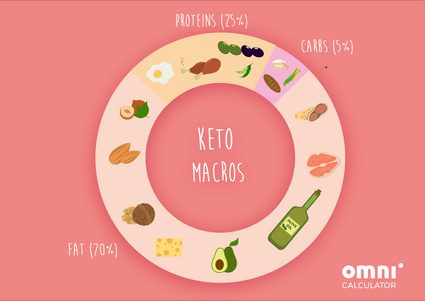
In order to achieve this effect, you will need to change the proportion in your macronutrients intake. The typical keto macros ratio is 70% fats, 5% carbohydrates, and 25% protein.

Keto macros ratio

Once the structure of your macros changes, your body will enter a state called ketosis. Since you're not providing enough carbohydrates to allow it to generate energy from glucose, your body will start burning fats. When the fat stored in your cells is broken down to produce energy, ketones (a particular type of acid) will be produced as a side effect of this process.

Am I in ketosis?

Once you start a keto diet, you might wonder whether you have already entered ketosis. You can quickly check it using keto sticks. They can be typically purchased over-the-counter in your local pharmacy, and are used like urine testing strips.

We recommend checking the level of ketosis in the morning, just after waking up. If you drink a lot of water over the course of the day, the keto sticks will understate the amount of ketones in your urine.

If you want a more reliable way to check the ketone levels (without the risk of diluting ketones in urine), you should conduct a blood test. You can use a dedicated ketone meter that analyzes a drop of your blood for the presence of BHB (beta-hydroxybutyrate), the main ketone produced by your body. An optimal concentration ranges from 1.5 to 3 mmol/L (millimoles per liter).

How to use this free keto calculator?

You can use this keto macro calculator to plan your diet and achieve your ideal weight. The process of finding your personalized keto macros ratio is divided into four steps.

Step 1: provide information about yourself.


Your diet should be adjusted to your body's needs. A teenager who plays in his school football team will have a different nutritional intake than his mother who has a 9-to-5 sedentary job. Our keto calculator takes into consideration the following factors:

  • Your sex - women typically have a lower calorie intake than men;
  • Your height and weight - if you're petite, you'll need fewer calories than a tall, well-built sportsman;
  • Your age - younger people need more energy from food;
  • Your activity level - intuitively, the more physically active you are, the more energy you need.

Step 2: calculate the calorie intake required for sustaining your current weight.


Our keto macronutrients calculator is based on the Mifflin - St Jeor equation. It allows you to find your Basal Metabolic Rate (BMR) - the amount of energy needed for your body to support its vital functions. This value is calculated according to two formulas - one for men and one for women:

BMR(men) = (10 * weight / 1kg + 6.25 * height / 1cm - 5 * age / 1 year + 5) kcal / day

BMR(women) = (10 * weight / 1kg + 6.25 * height / 1cm - 5 * age / 1 year - 161) kcal / day

After you calculate your BMR, you need to multiply it by a factor corresponding to your physical activity level:

  • Sedentary lifestyle (little or no exercise): 1.2
  • Slightly active lifestyle (light exercise or sports 1-2 days/week): 1.4
  • Moderately active lifestyle (moderate exercise or sports 2-3 days/week): 1.6
  • Very active lifestyle (hard exercise or sports 4-5 days/week): 1.75
  • Extra active lifestyle (very hard exercise, physical job or sports 6-7 days/week): 2.0
  • Professional athlete: 2.3

In case of doubt, pick the lower number from the list above; most people tend to overestimate their exercise level or forget about the cheat days that happen from time to time.

Step 3: pick your target weight and an optimal keto diet plan.


Once you know what is the recommended calorie intake for maintaining your current weight, you can modify it to achieve the results you want. As a first step, decide on your target weight - it can be lower or higher than your current one. Then, choose how fast you want to lose or gain weight.

A typical diet plan allows you to lose 0.5-1 kg (1-2 lbs) per week. Faster weight loss might be dangerous for your health, while a slower pace requires a lot of patience. Naturally, you don't have to be losing weight on the ketogenic diet; a lot of people decide to start this diet because of other health benefits (you can find them in the section health benefits of the keto diet).

It is typically assumed that each pound of body fat stores approximately 3500 kcal of energy. It means that if you want to lose one pound a week, you need to cut 500 calories per day from your daily calorie expenditure.

As a rule of thumb, you should never go below 1200 calories a day if you're a woman, and 1800 a day if you're a man. Also, make sure to check your BMI to ensure you won't be underweight once you're done with your keto diet!

Step 4: check out the keto macros ratio chart.


Was that a lot of work? We hope you had a blast filling out our free keto calculator! Now, you can enjoy the results, displayed as a helpful keto macronutrient chart.

The chart presents you with your recommended calorie intake, splits into fats, carbs, and protein, on a weekly basis. You can use it as a guideline when you're planning your keto-friendly menu for the week!

Even though the chart shows your recommended calories per day, we saved you the hassle of recalculating it into grams. Therefore, you can also use this free keto diet calculator to check how many grams of fats, carbs, and proteins you need.

We've already mentioned that the most common ratio for macronutrients during a ketogenic diet is 70% fats, 5% carbohydrates, and 25% protein. Some dietitians recommend increasing the proportion of fats even higher, to 75%, and cutting protein down to 20%. You can modify the macro split by manually inputting the desired percentage in our keto weight loss calculator.

You could also try an alternative to the standard ketogenic diet: a cyclical keto diet, favored by those trying to reduce their body fat and build their muscle mass. In this diet, you regulate your nutrition by adhering to the standard keto diet for 5-6 days in a row, followed by 1-2 days of increased carbs intake. The goal of such a diet is to regularly replenish the glucose reserve in your blood.

What foods should I be eating?

You might be worried that reaching 70% or even 75% of fats in your macro intake is short of impossible. Indeed, if you want to enter ketosis, you'll have to change your diet drastically!

The best meals for a keto weight loss consist of foods rich in "good fats":

  • Fatty fish, such as salmon, tuna, or trout;
  • Dairy products - eggs, butter, yogurt, cream, and virtually any kind of cheese;
  • Nuts and seeds of all sorts - walnuts, almonds, pumpkin seeds, poppy seeds or chia seeds;
  • Oils such as olive oil, avocado oil or coconut oil;
  • Avocados;
  • Dark chocolate (with very high cocoa content);
  • Meat, especially red meat, sausages, and ham;
  • Green and white vegetables - cauliflower, broccoli, asparagus, green peppers, salads;
  • Fat bombs.

Fat bombs are no-bake snacks with an extremely high fat percentage. You can make them out of chocolate, cream cheese, nut butter, cocoa powder, or coconut oil. Adding nuts and seeds will make them even more delicious!

If you're craving a keto-friendly snack, you can also try nuts, handfuls of berries (such as strawberries or blueberries), or cheese bites. You should avoid typical fast food snacks such as chips or burgers, though - not only do they contain a lot of carbs, but they're a source of unhealthy trans fats.

Eating all that fat will increase your water intake. It's a natural process, so make sure you're drinking a lot of water!

Foods to avoid on the ketogenic diet

Naturally, incorporating the foods listed above into your diet is not enough. You also need to make sure to cut down your carb intake. No more bread or pasta! You should steer clear of the following:

  • Bread - that's a big no-no unless you find one based on almond flour or coconut flour;
  • Grains and starch, including pasta, rice, and cereal;
  • Fruit - all except for little portions of berries;
  • Sugary snacks including soda, cakes, candy, and ice cream;
  • Beans such as chickpeas or lentils;
  • Vegetables - all except the ones listed in the previous section;
  • Alcohol, as it usually contains a high percentage of carbs.

While you shouldn't consume any sugar, you can substitute it with stevia or artificial sweeteners. You can also drink no-sugar drinks such as Coke Zero.

What is keto flu?

Once you start your ketogenic diet adventure, you will probably experience an unpleasant phase known as the keto flu. Also known as a carb flu, this is a short-term response of your body to a drastic change in nutritional habits.

Keto flu can be compared to the withdrawal syndrome. When you cut your carbohydrate intake, your body will initially crave carbs and have difficulties adjusting to the new diet. Symptoms resemble a regular flu. You might experience: nausea, vomiting, diarrhea, general weakness or dizziness, stomach pains, or difficulty sleeping. These symptoms usually cease after about a week.

Another unpleasant side effect of the keto diet is a keto rash. While not extremely common, it might happen to you at some point. The skin, usually around the neck, back and upper chest becomes red, itchy, and covered with a rash. The rash disappears after reintroducing carbohydrates into your diet.

Health benefits of the keto diet

If there are so many side effects, does it make any sense to start a keto diet? The answer is simple: yes! The ketogenic diet has multiple health benefits that are not necessarily associated with weight loss.

First of all, eating a lot of fats means that it's easier for you to feel full. You don't need to starve yourself to lose weight!

Another benefit of the keto diet is that you'll probably watch closer your fat intake. As a consequence, you're likely to improve your cholesterol levels, as you'll be picking unsaturated fats over trans or saturated fats.

What is more, this diet is recommended if you have type 2 diabetes, as it lowers blood sugar and insulin levels. In this case, though, make sure to consult your dietitian before you start a keto diet!

FAQ

How do you start a keto diet?

  1. Learn what foods you can and cannot eat.
  2. Learn how much of each type of food you should eat.
  3. Plan some keto meals and get your ingredients in.
  4. Start! Doesn't matter where or when, as long as you stick to it.
  5. Prepare for the keto flu, but don't worry, it'll pass soon.

Is keto healthy?

The verdict is still out on the long term benefits of a keto diet. If you are suffering from type 2 diabetes, you will almost certainly be better off, and some research has shown that it helps against tumours. You have to be careful to get all the right vitamins and nutrients, as well. Check with your doctor before making any major lifestyle changes.

Does the keto diet work?

Yes, if done correctly the keto diet will cause you to lose body fat. This is because being in a state of ketosis means that your body uses fats to fuel it, not carbohydrates. Consequently, you'll start burning your fatty tissues.

How many carbs should I eat on keto?

The number of carbohydrates you should consume on a keto diet depends on your current calorie consumption. Carbohydrates should make up about 5% of your daily calorie intake, ranging from around 20 g to up to around 40 g.

Bogna Szyk

normal (0.5 kg/1 lb per week)

Macro Ratio Low Carb Diet

Source: https://www.omnicalculator.com/health/keto

Share:
banner